Wilhelm, Hugo and Emma
A family story behind the mission of Wilhelm Foundation
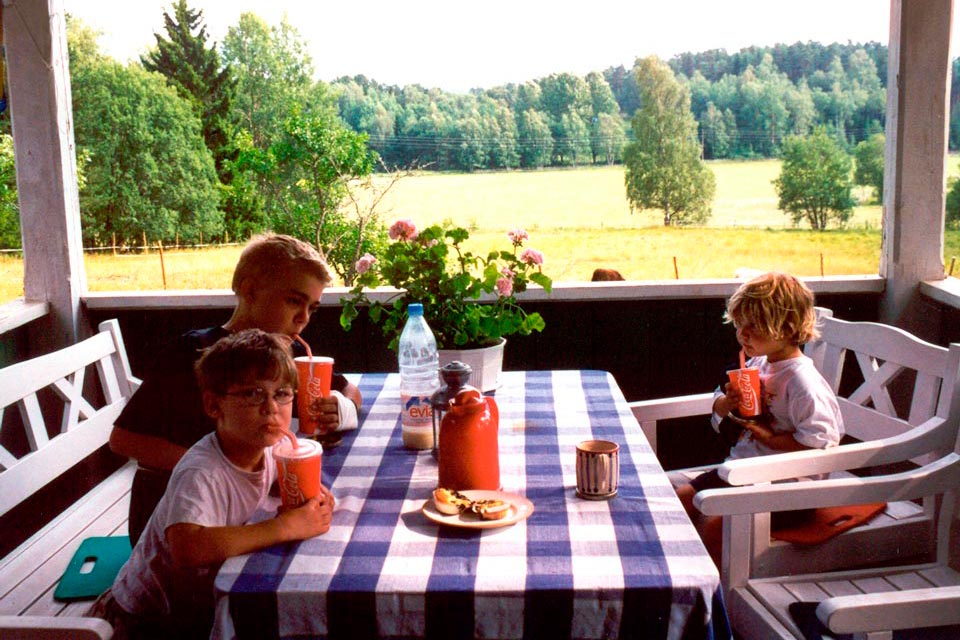
When Wilhelm was only a few months old, he suffered from severe stomach pain, which doctors attributed to lactose intolerance. At one year of age, epilepsy was suspected. We were repeatedly reassured that it was not dangerous and that he would outgrow it within a few years.
As parents, we continued to seek answers. However, every medical assessment reached the same conclusion: all tests and investigations were normal and reported as without remarks.
A professor of genetics was consulted, and extensive samples were taken. When none of the results deviated from normal, we were told that Wilhelm’s illness was a coincidence and that the condition was not hereditary.
When Wilhelm’s younger brother Hugo was born, he experienced his first seizure at six hours of age. An EEG performed the following day confirmed epilepsy.
At that point, we were told that if we had a daughter, she would be healthy. When Emma was born, she had her first seizure at just 30 minutes of age. Despite this early onset in all three children, the condition was not considered progressive, degenerative, or life-threatening.
We continued the search for a diagnosis. Despite thorough investigations by leading specialists in Sweden, Great Ormond Street Hospital in London, Johns Hopkins Hospital, USA and University Hospital Vienna, Austria, no diagnosis could be made. All results continued to come back without remarks. Doctors around the world were contacted, yet the disease remained unexplained.
Because no diagnosis existed, there was no targeted treatment. The children received medication to relieve symptoms, but without knowing the underlying cause, it was impossible to know whether these treatments were helping - or potentially causing harm.
Many people later asked how we dared to have more children. What is often misunderstood is that no doctor believed the disease was degenerative or fatal. When Wilhelm was 12 years old, his condition began to worsen, and he developed dementia. Only then did it become clear that the disease was progressing. At that time, Hugo was four years old and Emma was one year old.
"Our three youngest children died of an undiagnosed disease. Wilhelm died at the age of 16. Little Emma died the year after Wilhelm and she was only six years old. Two years after Emma died, our Hugo died. He became 10 years old.
When many people hear our 'tragedy', they do not think of all the great moments we had together and all that Wilhelm, Hugo and Emma have taught us. Having children is the most wonderful thing that can happen and losing children is the most terrible thing that can happen to me.
The years in between have been wonderful, fantastic and we had a lot of fun together. Our children were perhaps special with everything they taught us, such as taking the day here and now, being able to rejoice in the little things and find the light even though it looks dark.
So in retrospect, I am still deeply grateful that we did not know that the disease was fatal because then we would never have dared to have more children and then we would never have been parents to our wonderful children and have such a great time together, even if the years far too few. Painful years afterwards, but we had such a wonderful time together and the children never suffered from their illness except for the last weeks of their lives. "
Helene, Mother and Founder